

A fresh air system exhausts stale indoor air and brings in filtered outdoor air; an energy recovery unit also recovers heat — and, in an ERV, moisture — from the outgoing air. The U.S. EPA names inadequate ventilation a primary cause of indoor air problems. An HRV recovers sensible heat only; an ERV also transfers latent heat. ERV suits humid climates; HRV suits cold, dry climates.
| Feature | HRV | ERV |
|---|---|---|
| Recovers | Sensible heat only | Sensible + latent heat (moisture) |
| Humidity transfer | No | Yes |
| Best climates | Cold, dry winters | Humid summers, mixed |
| Typical core | Aluminum / plastic | Enthalpy paper / membrane |
How to Check the Heart of the Unit: The Heat Recovery Core
The core is where efficiency is made or lost. Ask: declared efficiency at what conditions (typical 70–90% sensible recovery — compare at the same airflow and temperature); core material (enthalpy paper suits ERV, aluminum/polymer washable for HRV); and spare-part availability. Request a third-party test report (TÜV, SGS, Intertek) with a 3–5 point performance curve.
What Air Filtration Levels Do You Need?
Minimum G4 pre-filter + F7 fine filter; add F9 or HEPA H13 for high-PM markets such as India, Vietnam, or the Middle East. Confirm filters are replaceable and ask about pressure drop — a denser filter lowers airflow, so specs should state airflow with filters installed. WHO links household air pollution to 2.9 million premature deaths in 2021.
How to Verify Certification Claims
For EU-bound products, ask for CE (with Declaration of Conformity and test report), ERP, and RoHS; for North America, UL/ETL with a verifiable file number. IGUICOO, for example, holds CE and ERP certification for its ERV/HRV range — request the certificate files and cross-check the report number.
What to Check for Cold Climates and Real-World Airflow
Frost is the number-one field failure: ask about automatic defrost, activation temperature, and a freeze-protected condensate drain. Airflow is often quoted at zero static pressure — ask for the figure at 100–150 Pa external static pressure. Compare noise at rated airflow (sound power vs pressure differ ~8–10 dB); above 40 dB(A) at operating speed causes complaints.
What B2B Buyers Must Ask Before Ordering
Clarify the OEM/ODM level (logo-only or custom models) in writing. MOQs run from dozens to hundreds of units; get lead times for first orders and reorders. Spare parts (filters, cores, motors, boards) must be orderable for 5+ years — request the price list up front.
FAQ
Is buying a ventilation system from China safe? Yes, if you verify the manufacturer — certifications, samples, factory audit. The risk is unverified suppliers, not the country of origin.
What’s the difference between an ERV and an HRV? An ERV transfers both heat and moisture between air streams; an HRV transfers heat only. ERV suits humid climates; HRV suits cold, dry climates.
Sources
- U.S. EPA — Introduction to Indoor Air Quality: https://www.epa.gov/indoor-air-quality-iaq/introduction-indoor-air-quality
- WHO — Household air pollution: https://www.who.int/news-room/fact-sheets/detail/household-air-pollution-and-health
- ASHRAE — Standards and Guidelines (62.1/62.2): https://www.ashrae.org/technical-resources/ashrae-standards-and-guidelines
Next Step: Benchmark Against a Certified Manufacturer
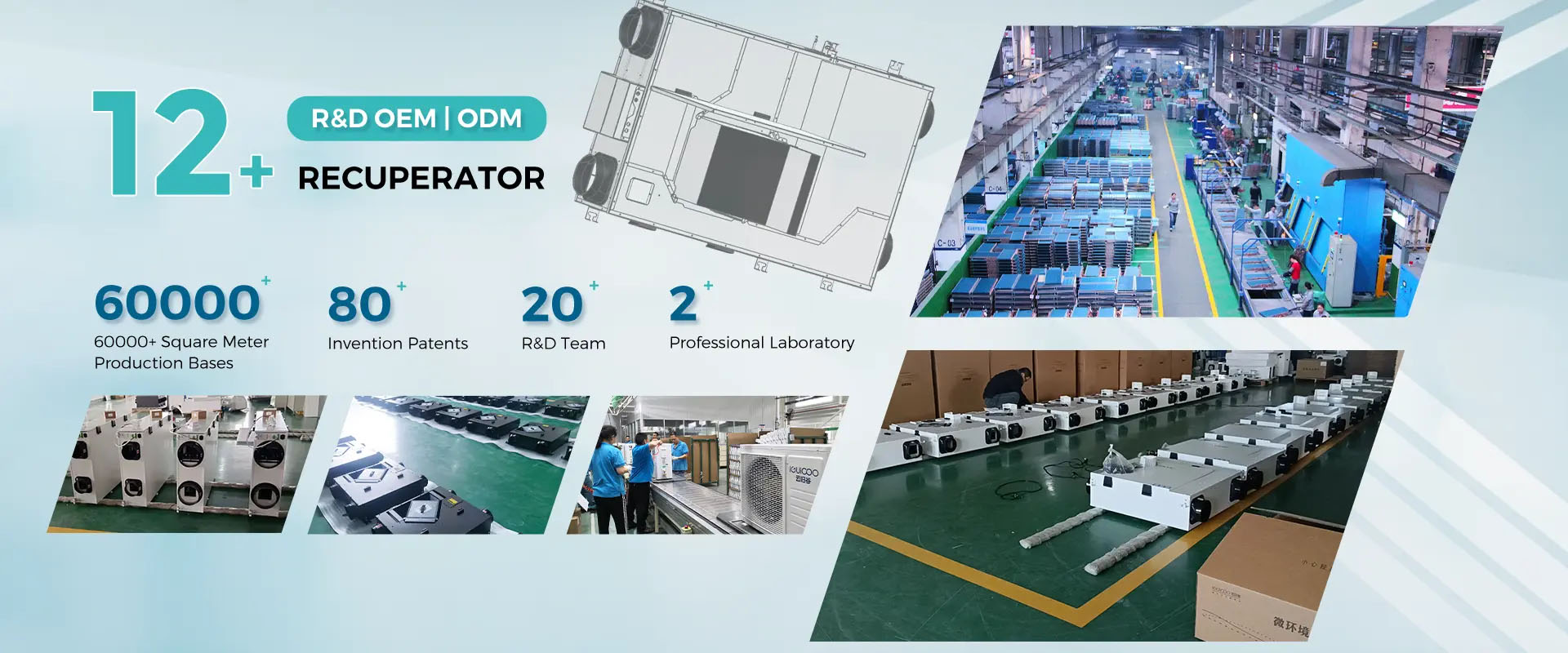
Benchmark every candidate against this checklist. IGUICOO (erviguicoo.com) is a China-based “A to Z” heat recovery ventilation manufacturer with its own production bases and laboratory, holds CE/ERP certification, and exports to 30+ countries. Request spec sheets, certification files, and sample terms to benchmark against your other quotes.
Post time: Aug-26-2026


