
The Crucial Role of Modern Ventilation in IAQ
As modern building envelopes become increasingly airtight to meet strict energy efficiency standards, the natural infiltration of fresh outdoor air is significantly restricted. This lack of natural air exchange can lead to the accumulation of indoor air pollutants, volatile organic compounds (VOCs), carbon dioxide, and excess moisture, resulting in poor indoor air quality (IAQ) and the notorious "sick building syndrome."
To combat this, engineers, builders, and architects rely on mechanical ventilation systems. The two primary technologies dominating the market are the energy recovery ventilator vs heat recovery ventilator. Understanding the nuances of ERV vs HRV is paramount to selecting the system that will deliver the highest energy efficiency, preserve structural integrity, and ensure the health and comfort of the building's occupants.
Core Working Principles: Sensible vs. Latent Heat
The primary distinction between an ERV and an HRV lies in the thermodynamics of the energy exchange process occurring inside the core matrix.
Heat Recovery Ventilators (HRV)
An HRV focuses solely on the recovery of sensible heat (temperature). During the cold winter months, the warm, stale indoor air being exhausted from the building transfers its heat energy to the incoming cold, fresh outdoor air through a highly conductive heat exchange core. The two airstreams never mix. In summer, the process is reversed: the warm incoming fresh air transfers its heat to the cooler exhaust air, reducing the cooling load on the air conditioning system.
Key Mechanism: The core is typically constructed from aluminum or specialized polymers designed to maximize thermal conductivity while preventing any mass transfer (moisture exchange).
Energy Recovery Ventilators (ERV)
An ERV goes a step further by transferring both sensible heat (temperature) and latent heat (moisture/humidity). The ERV core is constructed from a semi-permeable membrane that allows water vapor molecules to pass from the higher humidity air stream to the lower humidity air stream, while keeping pollutants, CO2, and air streams completely separated.
Key Mechanism: In humid summer climates, the incoming hot, humid fresh air transfers both its heat and moisture to the cooler, drier exhaust air before entering the building. In dry winter climates, the ERV retains moisture from the exhaust air and transfers it back to the dry incoming outdoor air, maintaining comfortable indoor relative humidity levels.
ERV vs HRV: The Ultimate Comparison Matrix
A comprehensive breakdown of how energy recovery ventilators compare directly against heat recovery ventilators across key performance parameters.
| Feature / Parameter | Heat Recovery Ventilator (HRV) | Energy Recovery Ventilator (ERV) |
|---|---|---|
| Heat Recovery Type | Sensible Heat Only (Temperature) | Sensible + Latent Heat (Temperature + Humidity) |
| Core Material | Aluminum, Plastic, or Stainless Steel | Permeable Membrane / Enthalpic Core |
| Winter Operation | Preheats incoming air; may require frequent defrost cycles in extreme cold. | Preheats and humidifies incoming dry air; reduces frost buildup on the core. |
| Summer Operation | Pre-cools incoming warm air; does not remove outdoor humidity. | Pre-cools and dehumidifies incoming warm air; reduces AC latent load. |
| Indoor Humidity Control | Can cause indoor air to become excessively dry during winter. | Helps maintain optimal indoor humidity (30% - 50% RH) year-round. |
| Condensate Drain | Required (produces significant condensation). | Typically not required (moisture is transferred back into the airstream). |
Climate Suitability: Matching System to Geography
Choosing between an ERV vs HRV is heavily dictated by the local climate. Installing the wrong system can lead to discomfort, excessive energy use, or moisture-related structural issues.
1. Cold & Dry Climates (HRV Dominance)
In regions characterized by long, freezing winters and low ambient humidity (such as Canada, the northern tier of the United States, and Northern Europe), an HRV is often the default choice. Since heating is the primary load, recovering sensible heat is highly efficient. Because indoor activities (cooking, breathing, showering) generate moisture, an HRV helps exhaust this excess humidity, preventing condensation on windows and structural walls.
2. Hot, Humid & Four-Season Climates (ERV Dominance)
In regions with hot, humid summers (such as Southeast Asia, the Southern United States, and parts of Central and Southern Europe), an ERV is indispensable. Introducing raw, humid outdoor air directly into a building forces the air conditioning system to work overtime to condense moisture out of the air. An ERV pre-dehumidifies the incoming air, dramatically lowering the cooling load. In the winter, it prevents the indoor air from becoming uncomfortably dry, which can cause respiratory irritation and damage wood furnishings.
Reducing HVAC System Load & Operating Costs
In commercial and large-scale residential projects, ventilation accounts for a massive portion of the total building energy consumption. This is where the choice of an energy recovery ventilator vs heat recovery ventilator directly impacts the bottom line.
When outdoor air is humid, the HVAC system must perform two types of cooling: sensible cooling (lowering the air temperature) and latent cooling (removing moisture). Latent cooling requires a significant amount of energy because water must undergo a phase change from vapor to liquid on the cooling coils.
By utilizing an ERV, up to 70-80% of the moisture in the incoming fresh air is transferred to the exhaust air stream before it ever reaches the HVAC unit. This reduces the latent load on the air conditioning system, allowing developers to:
- Downsize HVAC Equipment: Smaller chillers, DX units, and ductwork can be specified, lowering initial capital expenditure.
- Lower Monthly Energy Bills: Reduced compressor run-times translate to substantial operational energy savings.
- Improve Indoor Comfort: By controlling humidity, the building avoids the clammy feeling often associated with over-cooled but poorly dehumidified spaces.
Global Standards & Quality Certifications
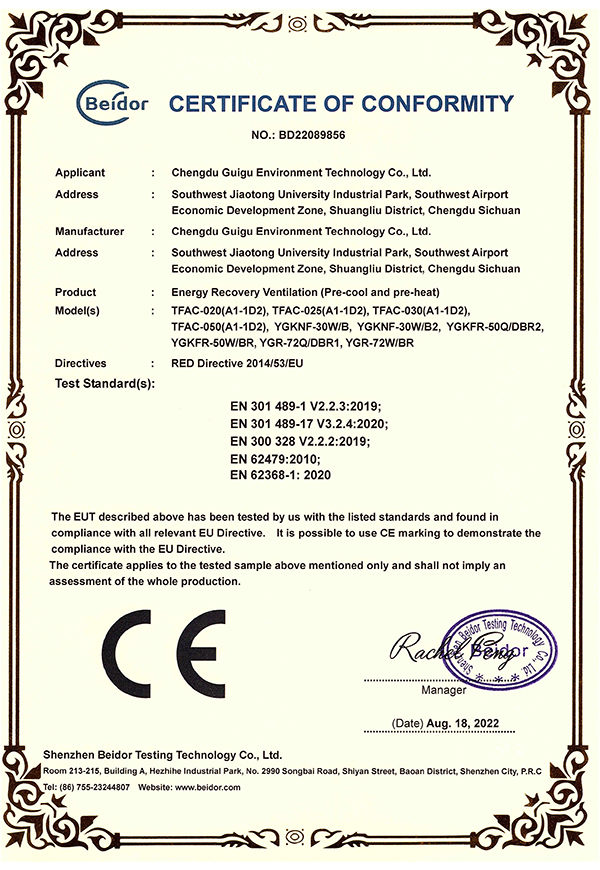
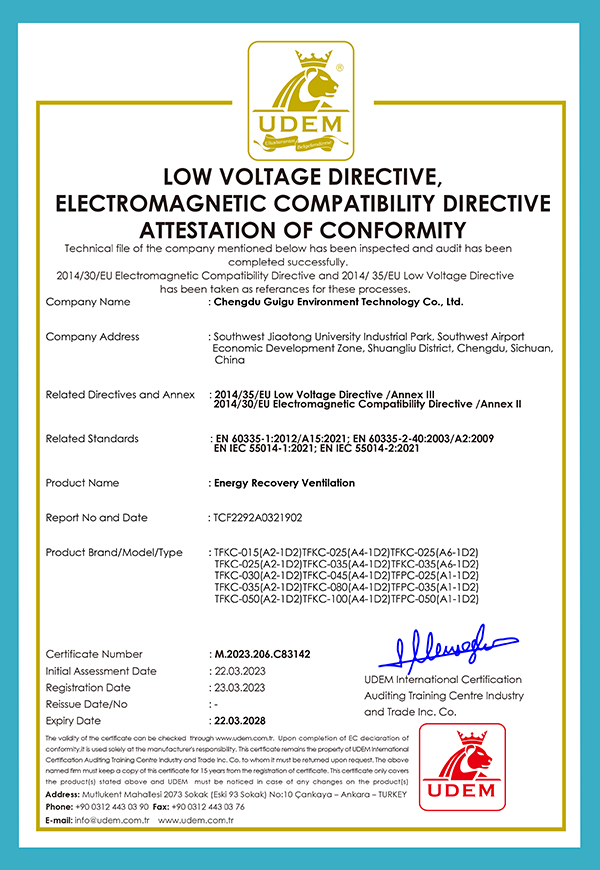
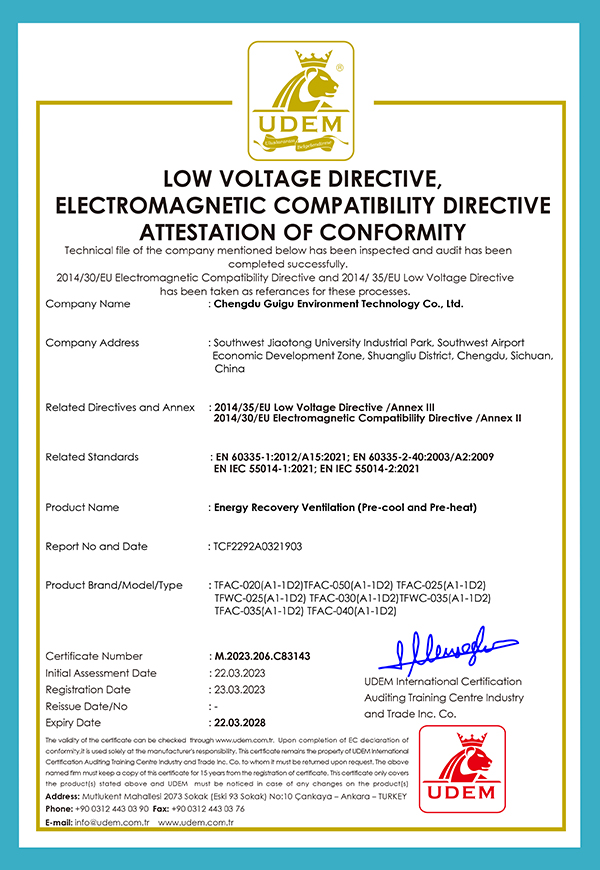
IGUICOO products are manufactured to meet the most rigorous international standards, ensuring safety, reliability, and top-tier performance for your mechanical ventilation projects.
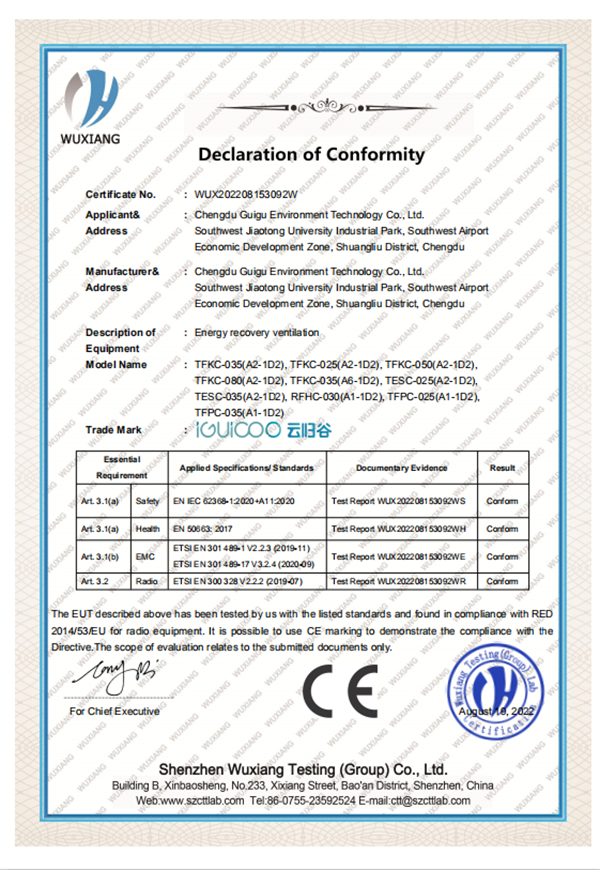
CE Mark
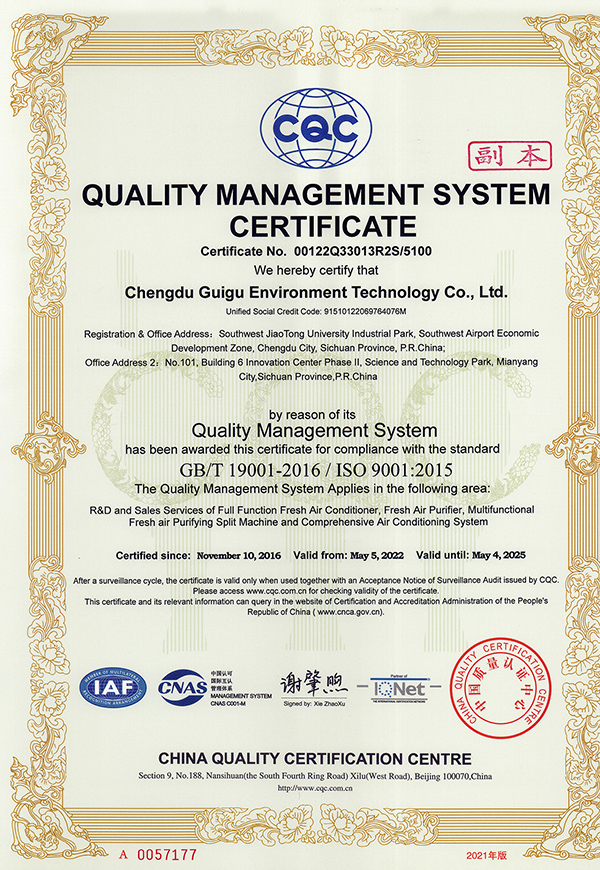
ISO 9001 Quality
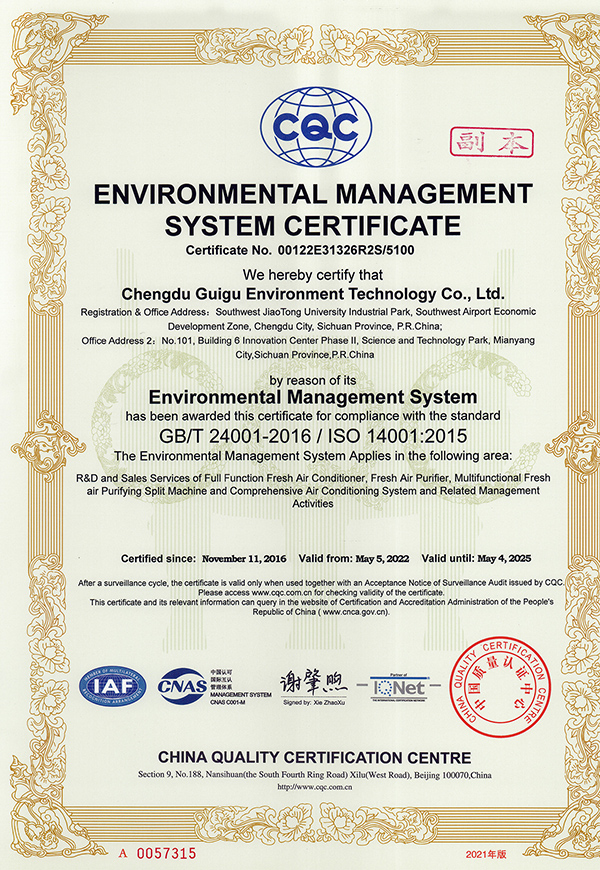
ISO 14001 Env
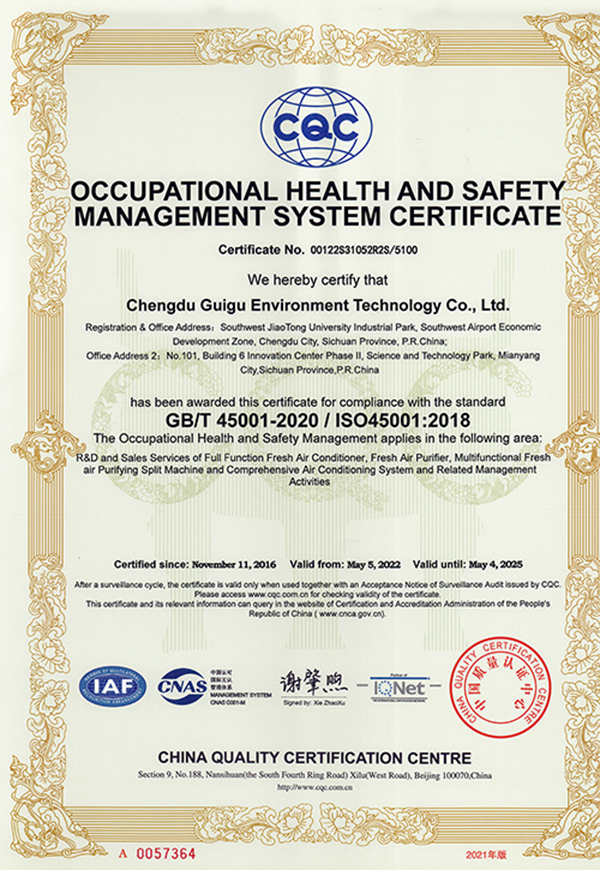
ISO 45001 Safety
Company Profile
Let People Enjoy Pure And Natural Breathing!
IGUICOO, established in 2013, is a professional company focused on the research, development, sale, and service of ventilation systems. We are committed to improving air cleanliness, oxygen content, temperature, and humidity. In order to better ensure product quality, we have obtained ISO 9001, ISO 14001, ISO 45001, and over 80 patent certificates.
Our systems are engineered to integrate seamlessly into diverse architectural projects, offering customized solutions that balance energy savings with superior occupant comfort.
View More


Why Choose IGUICOO Ventilation Solutions?
We deliver comprehensive, custom-tailored ventilation systems designed to meet the demands of modern energy-efficient buildings.
-

Professional Strength
As a leading manufacturer in the ventilation equipment field, we hold a deep technical background and numerous patents to resolve complex air quality challenges.
-

Production Advantages
Our state-of-the-art automated production lines are combined with strict quality management systems to guarantee that every unit meets the highest global standards.
-

Customized Services
We are your customized solution provider, dedicated to creating the most efficient and suitable configurations designed for your project's specific climate and layout.
-

One-stop Service Experience
From consulting and HVAC load calculations to design, production, installation guidance, and maintenance, we ensure a seamless and worry-free experience.


